Care of Creation
Lenten Series:
Focus on Food Loss and Waste
Week 4 - March 18
Blessed are the creative cooks, for they turn leftovers into feasts.
Blessed are the patient preservers, for they freeze, pickle, and store with care.
This week, watch Rutgers’ educational video “Environmental Impacts of Food Waste” and read the meditations below. Afterward, take a moment to think about the questions below and pick a practice to try this week.
Blessed are the creative cooks, for they turn leftovers into feasts.
They see possibility where others see scraps, transforming yesterday’s bread into tomorrow’s comfort, and proving that nothing good need be discarded.
Have you learned the joy of batch cooking? Do you know the peaceful joy of rising early in the morning to produce a large pot of split pea, lentil, or black bean soup for your friends at church while you prepare for yourself a similar pot of soup which will feed you for five days? Have you ever looked in your refrigerator at the roasted vegetables left over from Sunday’s dinner and seen there a treasure trove that can add vital nourishment to your family’s menu the next day? Then perhaps you are a food artist. Perhaps God has given you the gift of seeing deliciousness where others only see leftovers, possibilities where others see scraps.
Perhaps, whether you are male or female, you have manifested something of the spirit of Lady Wisdom, who we meet at the beginning of the Book of Proverbs in chapters one and eight, and in street clothing in chapter thirty-one in the final 22 verses of the book. Many scholars believe this is more than just a picture of a virtuous woman. Many believe this is an image of God the Holy Spirit or even of Jesus before the incarnation. Please consider reading Proverbs 31 and consider whether or not your use of leftovers can be Spirit-led, even God inspired. And then turn your creativity loose! Do throw that food away. A masterpiece awaits your family among the chilled steamed broccoli and boiled potatoes. Just ask God to guide you.
Blessed are the patient preservers, for they freeze, pickle, and store with care.
They honor the harvest by extending its life, ensuring that the bounty of one day sustains the hunger of another.
How lucky we are to have freezers. Did you know that frozen fruits and vegetables, picked and frozen at their peak of ripeness, are even healthier than so-called fresh fruit and vegetables, which can take an average of two weeks to reach us. Of course, food grown on local farms can reach us in a few hours, and vegetables grown 100 miles away can reach our grocery stores in three weeks, but much of our produce makes a long journey on refrigerated trucks and ships before it reaches us. Yes, of course this is wasteful, but that means it is even more wasteful to let even a single berry go to waste after such a huge investment.
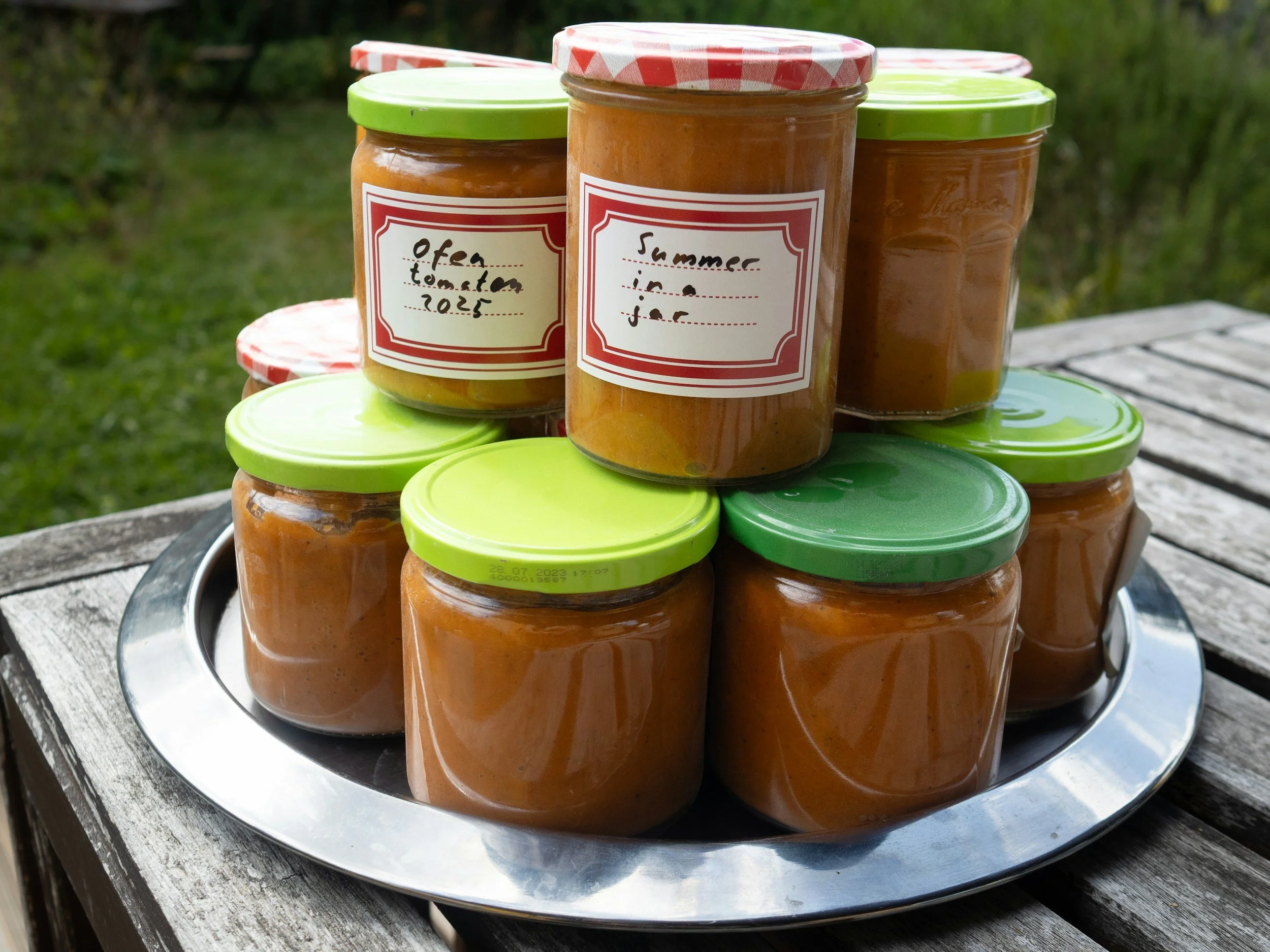
And that is where pickling and canning can come in. What? You say you wouldn’t know where to begin? Purchase a couple of seed sprouting mason jars with 2 inch wide mouths and stainless-steel sprouting lid covers with a drip tray (whole rig is less than $20.00 on Amazon) and grow yourself some broccoli sprouts, the single most nutritious thing that you can put into your mouth. Eat what you want for that day but freeze the rest for the future. Or pickle and can the way Grandmom and Grandpa used to in the old days. Both preserve seasonal produce, preventing it from going to waste and reducing the amount of food in the landfills. When we use reusable containers for pickling, freezing, or canning we reduce our reliance on single use packaging containers. As a bonus, fermented foods are also great for our gut biome. And please remember, you can pickle without sodium chloride. Potassium chloride is also a salt that can be used to create a pickling solution, garlic and horseradish can be added to vinegar to inhibit the growth of microorganisms, and mustard seed and black pepper can be used to flavor vegetables pickled in vinegar.
— Pastor Jeff Elliott for the Care of Creation Justice Group
Questions to think about this week:
How many uses can you imagine for the leftovers from dinner tonight? Try to make a list of all the ways they could be used creatively.
Think through the food that was left behind on your plate, at home or in a restaurant. Did you take too much or order something you couldn’t finish? Not like something as much as you thought you would?
Look through your fridge or freezer. How many items are destined to be thrown out because they’ve been forgotten?
Practices to try:
Check out a book such as Eat it up! : 150 recipes to use every bit and enjoy every bite of the food you buy for creative ways to use all the useful parts of the food we buy (such as the little bit of honey or jam etc. in a jar as the base for a sauce or vinaigrette).
Chop and freeze herbs in small quantities for later use, freeze leftover tomato paste in ice cube trays for future use, and blanche and freeze wilting veggies for a later soup.
This week’s recipe and prayer:
Sour Lentil Soup
Serves: 6
Ingredients:
1⁄2 c. extra-virgin olive oil
2 large onions, chopped
2 stalks celery, chopped
3 large carrots, chopped
3 turnips, chopped
1⁄2 head garlic, peeled and chopped
1 lb. lentils
1 small can diced tomatoes
1 bunch parsley, chopped
1 bay leaf
1 tsp. oregano
1⁄2 tsp. black pepper
1 tsp. salt
6 c. water
1⁄4 c. red wine vinegar
Instructions:
1. Heat oil to medium in large soup pot or Dutch oven.
Add onions, celery, carrots, and turnips. Cook, stirring
occasionally, for about 10 minutes, till beginning to soften.
2. Add the garlic and let cook 1 minute.
3. Stir in lentils, tomatoes, parsley, bay leaf, oregano, and black
pepper, then pour in water.
4. Bring to a boil, reduce heat, and simmer covered for about 45
minutes, or until all the vegetables and lentils have softened,
but not gotten mushy.
5. Add 1 tsp. salt and 1⁄4 c. red vinegar and let sit overnight.
(Adding salt and vinegar too soon interferes with the cooking
of the lentils; but if you eat right after adding them, the flavor
won’t have penetrated the lentils yet.)
6. The next day, reheat and taste for salt and vinegar, adding
more of both as needed, or more water if the soup is too thick
for your liking.
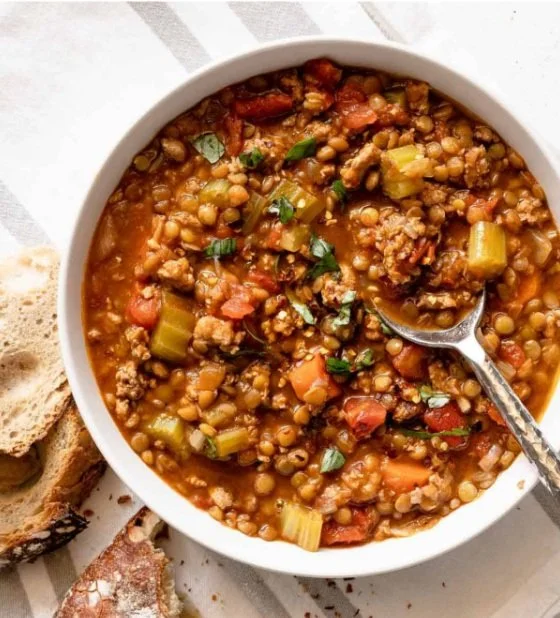
Heavenly Father, Esau son of Isaac was so taken with a pot of lentil soup that he traded away his birthright to Jacob for it. Fortify us with this meal so that we might not foolishly trade worthy things for unworthy, but rather grow in strength to serve you all the days of our life. In Jesus’ name, Amen.
Prayer and Recipe from Rev. Sarah Hinlicky Wilson
More Program Information from the 24-25 Bishop’s Challenge:
Food Pantry
Buy Local
Reduce Food Waste
Meatless Monday
Plant-Based Eating
Community Garden
Hydroponic Garden
Zero Waste Event
Waste Audit
Reduce Paper Waste
Zero Waste Fellowship
Reusable Bags
Expand Program
Institutional Recycling
Tech Recycling
Materials Reuse
Governance, Policies, and Communication
Green Purchasing Policy
Creation Care Resolution